
Talha Wine, a Roman Heritage

There are wines that are explained by technique; Talha Wine is also explained by time. When writing about Talha Wine, mentioning its origin, the history of its production in Alentejo, and the fact that it is still made today, including in Vinhos Verdes, at the estate where APHROS wine is born, in the Lima region, one is speaking of an ancestral practice that continues to gain meaning among those who seek Portugal beyond the obvious.
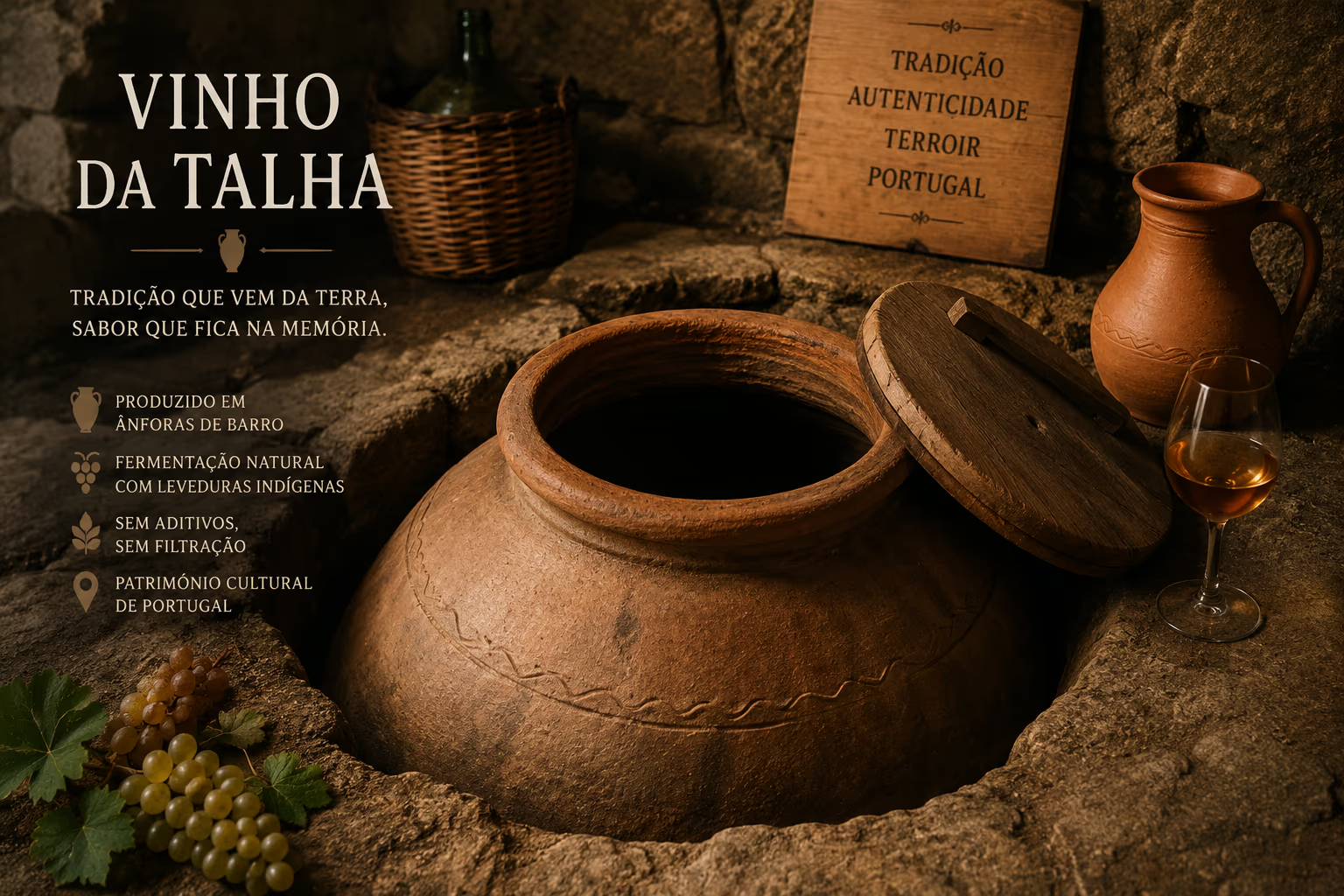
The talha is more than a clay vessel. It is the place where must, skins, seeds, and time meet, giving rise to wines with very distinct texture, freshness, and expression. For curious travelers, it is a doorway into a more intimate relationship with the landscape and with the gestures that shaped Portuguese viticulture.
The origins of Talha Wine in Alentejo
Wine production in clay vessels has very ancient roots in the Mediterranean. In Portuguese territory, the Roman presence left deep marks on agricultural and wine culture, and it is often associated with the spread and consolidation of the use of amphorae and large talhas. In Alentejo, this heritage found conditions to endure: wine, clay, family know-how, and a strong connection to rural life.
For centuries, many Alentejo households produced their own wine in clay talhas. The grapes were harvested, crushed, and placed in the talha, where they fermented in contact with the solid parts. The wine was then drawn off through the tap installed near the base of the vessel, while the pomace remained at the bottom.
This was not an enological curiosity or a museum piece. It was a practical way to ensure wine for the family, for workers, and for the celebrations of the agricultural calendar. Each talha carried the identity of the cellar, the harvest, and the person who tended it.
The past that survived modernization
The arrival of cement tanks, stainless-steel vats, and more controlled winemaking methods profoundly changed wine production in Portugal. Many talhas fell out of use, either because they were difficult to handle or because it became necessary to ensure greater consistency in larger volumes.
Even so, in Alentejo, especially in the area of Vila de Frades, the tradition endured. The preservation of this heritage is due to producers and families who continued to see talhas as a distinctive way of making wine. Today, Talha Wine is both memory and present: it respects an ancient method, but it is interpreted by producers attentive to hygiene, grape origin, and the balance of the wine.
There is, however, an essential nuance. Not every wine made in clay is the same, nor does every talha lead to the same profile. The vessel's porosity allows a slow exchange of oxygen; the size of the talha, the type of clay, the interior coating, the grape variety, and the duration of maceration all have a decisive influence on the result. It is a traditional method, but never an automatic one.
Talha Wine in Vinhos Verdes and the Lima region
It is in the contrast between regions that this tradition becomes especially fascinating. If Alentejo is the most obvious historical reference for Talha Wine in Portugal, current production in territories such as the Vinhos Verdes region shows that clay does not belong to a single landscape.
At the estate where APHROS wine is produced, in the Lima region, the use of the talha takes on its own interpretation. Here, the Atlantic influence, the granite soils, and the natural acidity of the region's grapes create a setting very different from the heat of Alentejo. The result does not seek to imitate southern wines: instead, it asserts a local reading of an ancient technique.
In Vinhos Verdes, where freshness and tension are central elements, vinification in talha can add aromatic depth and broader texture without erasing the mineral, vibrant identity of the territory. It is a dialogue between heritage and place. The talha is the same ancestral idea; the landscape, the grape varieties, and the climate write a completely different expression.
For those exploring northern Portugal with time and attention, this is a particularly valuable discovery. The Lima region offers rivers, vineyards, rural heritage, and a highly precise gastronomy, but it also reveals producers who do not treat tradition as a decorative argument. They use it to make wines with character, demanding and connected to the land.
Tasting the wine in context
A Talha Wine deserves to be tasted slowly, ideally at the table and accompanied by local products. It may show notes of ripe or citrus fruit, herbs, dried flowers, spices, and a subtly earthy texture. Some styles are direct and luminous; others have greater structure, cloudiness, or a more gastronomic profile. Surprise is part of the experience.
To understand the wine, it is not enough to look at the glass. It is worth seeking out the talha, listening to the harvest story, and understanding how the producer decides when to draw off the wine. It is in this closeness between cellar, landscape, and table that a private journey through the North takes on another dimension: not merely visiting a region, but keeping the memory of a flavor that could only have been born there.